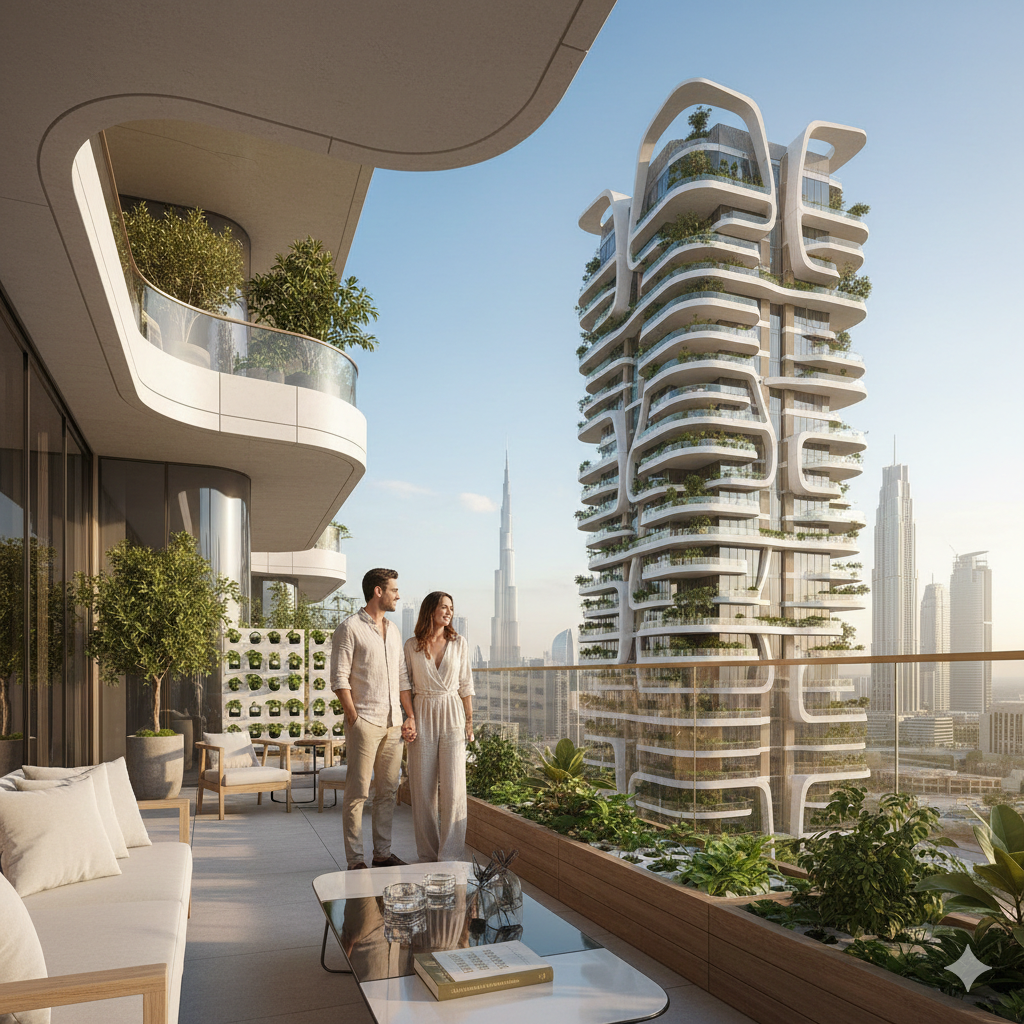
Dubai is rapidly redefining luxury living—not just through iconic architecture, but through sustainability. As environmental awareness grows among homeowners and investors, LEED-certified residential buildings are becoming a key benchmark for quality, efficiency, and long-term value.
This guide explains what LEED certification means, why it matters, and how it’s shaping the future of residential living in Dubai.
What Is LEED Certification?
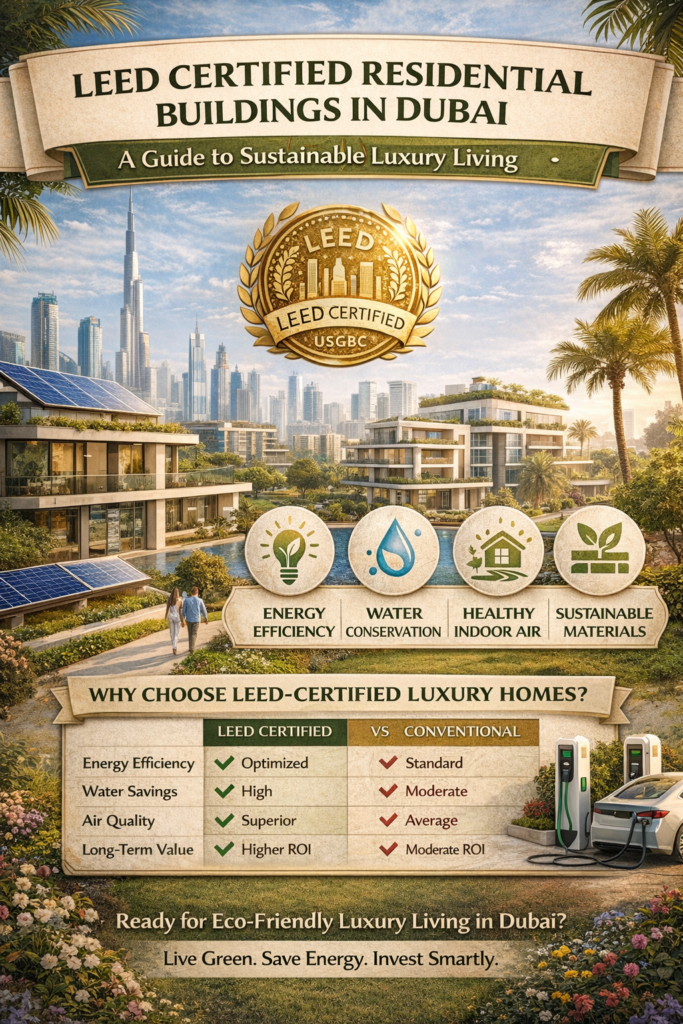
LEED (Leadership in Energy and Environmental Design) is a globally recognized green building certification developed by the U.S. Green Building Council.
LEED-certified buildings are designed to:
- Reduce energy and water consumption
- Lower carbon emissions
- Improve indoor air quality
- Use sustainable materials
- Promote healthier living environments
Certification levels include Certified, Silver, Gold, and Platinum, with Platinum being the highest standard.
Why LEED Certification Matters in Dubai’s Residential Market
Dubai’s climate makes energy efficiency especially important. LEED-certified residential buildings help address this by combining smart design with advanced technology.
Key benefits for homeowners and investors:
- Lower electricity and water bills
- Enhanced indoor comfort in hot climates
- Higher resale and rental value
- Healthier living spaces
- Alignment with Dubai’s sustainability goals
Key Features of LEED Certified Residential Buildings
LEED-certified homes in Dubai typically include:
🌱 Energy Efficiency
- High-performance insulation
- Energy-efficient HVAC systems
- Smart lighting and home automation
- Solar-ready infrastructure
💧 Water Conservation
- Low-flow fixtures
- Greywater recycling systems
- Efficient irrigation for landscaping
🌬️ Indoor Environmental Quality
- Low-VOC paints and finishes
- Improved ventilation and air filtration
- Natural daylight optimization
🧱 Sustainable Materials
- Locally sourced materials
- Recycled and low-impact construction materials
- Reduced construction waste
Popular Areas in Dubai Featuring LEED-Certified Residences
Several master-planned communities and developers in Dubai are integrating LEED principles into residential projects, especially in:
- Sustainable urban communities
- Waterfront developments
- Mixed-use smart cities
- Premium gated residential clusters
These developments appeal strongly to eco-conscious buyers and international investors.
LEED Homes vs Conventional Residential Buildings
| Feature | LEED-Certified Homes | Conventional Homes |
|---|---|---|
| Energy Consumption | Significantly Lower | Higher |
| Water Efficiency | Optimized | Standard |
| Indoor Air Quality | Superior | Average |
| Environmental Impact | Reduced | Higher |
| Long-Term Value | Higher ROI | Moderate |
Are LEED-Certified Homes Worth the Investment?
Absolutely. While LEED-certified residential units may have slightly higher upfront costs, they deliver:
- Long-term savings on utilities
- Lower maintenance costs
- Strong demand from tenants and buyers
- Better alignment with future environmental regulations
For investors, LEED certification enhances asset value and marketability.
Dubai’s Vision for Sustainable Residential Living
Dubai continues to align its real estate growth with sustainability initiatives, green building regulations, and smart city strategies. LEED-certified residential buildings play a vital role in this transition—bridging luxury, comfort, and environmental responsibility.
Final Thoughts
LEED-certified residential buildings in Dubai represent the future of premium living—where sustainability meets sophistication. Whether you’re a homeowner seeking healthier living or an investor focused on long-term returns, choosing a LEED-certified residence is a smart, future-ready decision.
🌍 Live better. Save more. Invest responsibly.